

Our Legacy of Leadership
For 80 years, the Virginia State University Military Alumni Chapter has stood as a beacon of excellence, leadership, and dedication. Founded by alumni who commissioned through the ROTC program, the chapter is a stronghold for military-connected graduates who continue to lead and inspire. Our members are mentors, leaders, and community builders who contribute to the success of the next generation
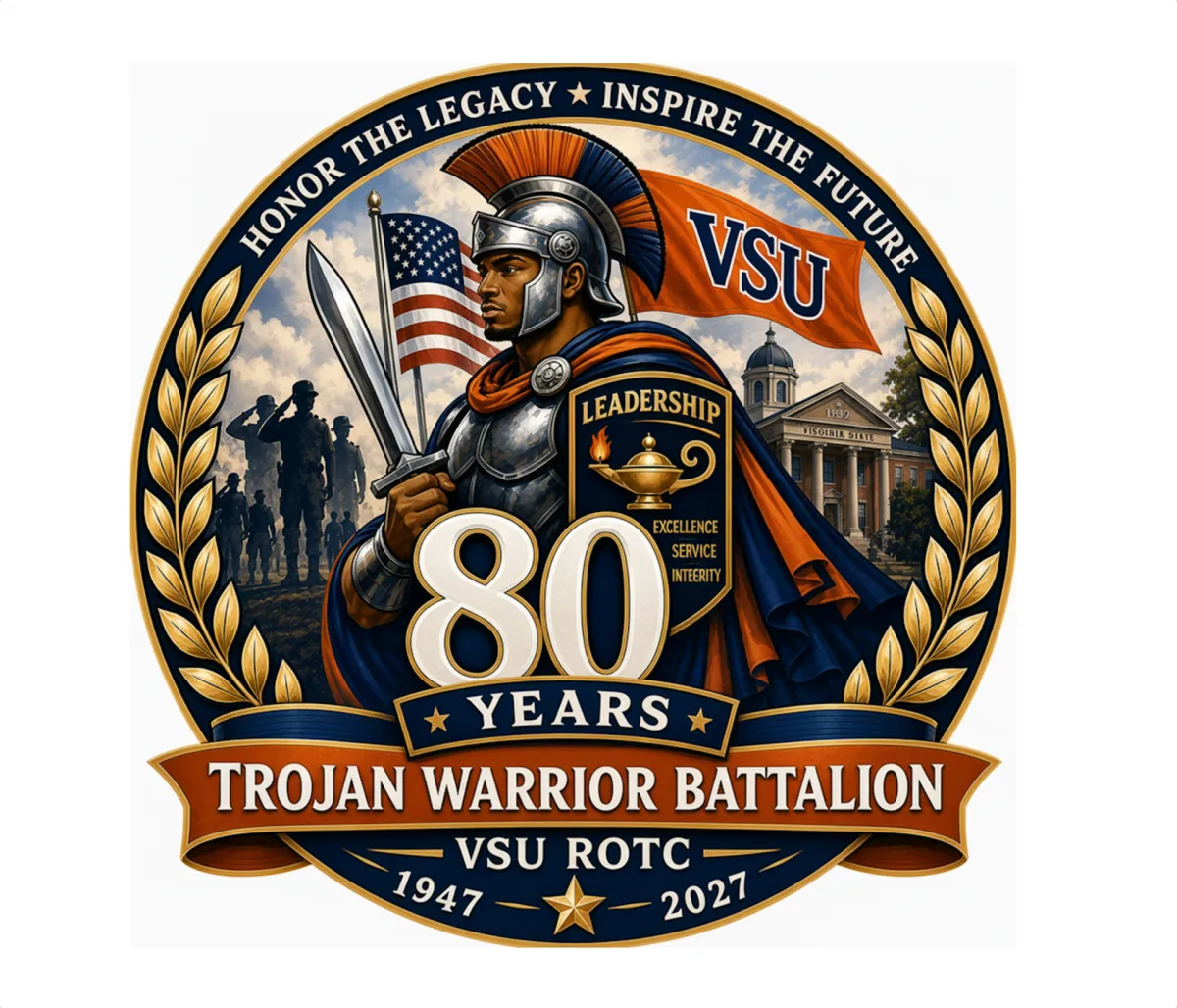
Celebrating 80 Years of Trojan Warrior Leadership
Honor the Legacy. Celebrate the Present. Inspire the Future.
Click the image to visit our 80th Anniversary webpage and learn more.




History of the Virginia State University ROTC Program
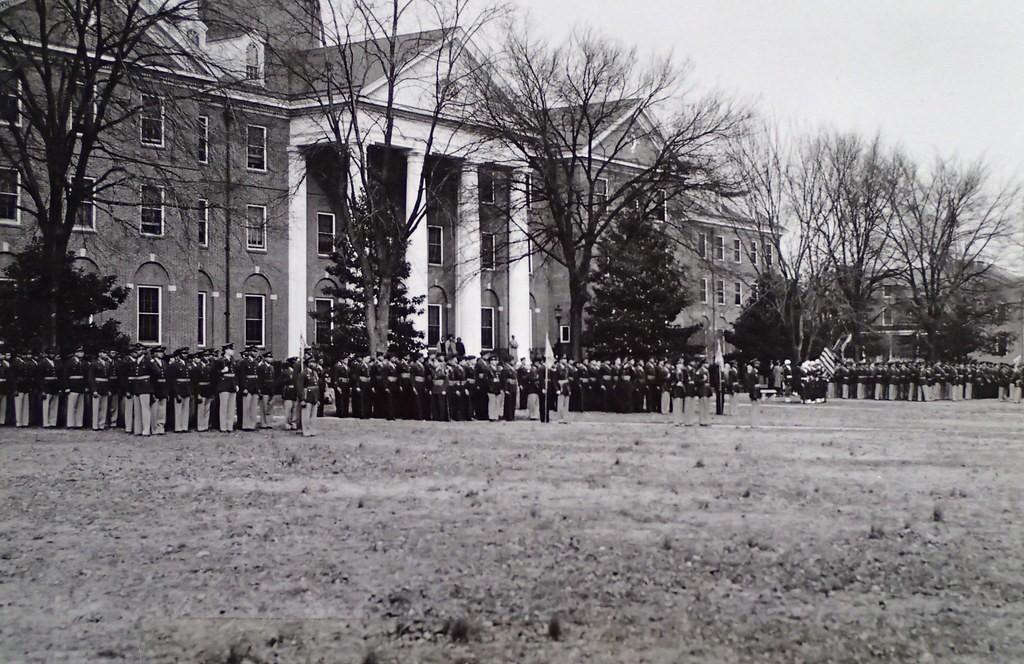
Established: 1947
Institution: Virginia State University (previous Virginia State College)
Program: Army Reserve Officers' Training Corps
Battalion: Trojan Warrior Battalion
Origin: Established as a Quartermaster-oriented ROTC Program
First Commissioning Class: May 1947
The Virginia State University Army Reserve Officers' Training Corps traces its history to 1947, when an ROTC unit was established at then-Virginia State College. From its early years as a Quartermaster-oriented program, VSU ROTC developed generations of officers and leaders whose service extended across the Army, the Nation, and communities around the world. Over eight decades, the program evolved through changes in military requirements, national events, university life, and the composition of the cadet corps while maintaining its central mission of developing leaders.
This history page is intended to preserve and share the documented story of the Trojan Warrior Battalion. It brings together program milestones, commissioning history, cadet organizations and traditions, distinguished alumni, affiliated institutions, photographs, archival records, and alumni recollections. It is designed as a living history and will continue to expand as additional records are located, verified, and contributed.
VSU ROTC has developed generations of officers and leaders whose contributions extend beyond the U.S. Army to the Commonwealth of Virginia, the nation, their professions, and their communities. This anniversary is also an opportunity to strengthen support from the university, alumni, the Army, and the community, ensuring the Trojan Warrior Battalion remains strong for the next 80 years and beyond.
VSU ROTC's legacy is especially significant within the history of African Americans in military service. Recognizing ROTC as a pathway to greater leadership and professional opportunities, Virginia State College President Luther H. Foster championed its establishment. On July 1, 1947, ROTC was officially activated at Virginia State College as a Quartermaster unit under Captain Robert M. Hendricks, Jr., with enrollment initially limited to 150 cadets.
Established just one year before President Harry S. Truman signed Executive Order 9981 in July 1948, Virginia State College’s ROTC program was well positioned to contribute to a period of significant change within the U.S. military. As the Army moved toward integration, Virginia State provided an established foundation for preparing and commissioning highly qualified officers for service in an evolving force. The College adapted its military instruction and expanded opportunities for cadets to serve across a broader range of Army branches and assignments. Through rigorous academic preparation, military training, and leadership development, Virginia State helped strengthen the officer pipeline and demonstrated its graduates' capability and readiness to serve and lead throughout the U.S. Army.
Since the initial enrollment of 150 cadets, VSU ROTC is estimated to have commissioned approximately 1,730 Army officers, including 13 general officers and hundreds of colonels, lieutenant colonels, majors, and captains. Today, VSU’s legacy of developing Army leaders remains strong and visible across all components of the force. Currently, 274 VSU-commissioned officers are serving in the Active Army, Army Reserve, and Army National Guard—120 on active duty, 28 in the Army Reserve, and 126 in the Army National Guard. By rank, this distinguished group includes 21 Second Lieutenants, 34 First Lieutenants, 95 Captains, 64 Majors, 45 Lieutenant Colonels, and 15 Colonels. These officers represent a continuing pipeline of leadership—from newly commissioned lieutenants to senior field-grade officers—and demonstrate the enduring impact of VSU ROTC across the Total Army.
In July 2025, VSU ROTC entered another important chapter. As the Army rebalanced Senior ROTC nationwide—closing programs at 10 colleges and universities and implementing a 12 percent personnel reduction—VSU was selected to serve as the host ROTC program for five extension institutions: Randolph-Macon College, Richard Bland College, the University of Richmond, Virginia Commonwealth University, and Virginia Union University. This expanded regional mission underscores both the Army's continued confidence in VSU ROTC and the importance of ensuring the program has the institutional support and resources necessary to succeed. The 80th Anniversary is therefore not only a celebration of an extraordinary past, but an opportunity to strengthen and position the Trojan Warrior Battalion for its next 80 years of leadership, service, and excellence.
Historical Source Acknowledgment
A significant portion of the historical information presented in this document was drawn from History of the Reserve Officers’ Training Corps at Virginia State College: 1947–1973, a master’s thesis by David Louis Brower, completed on May 22, 1981.
Brower was a 1970 graduate of North Carolina Agricultural and Technical State University in Greensboro, North Carolina, where he earned a bachelor’s degree in history and was commissioned as an officer in the United States Army. He subsequently served in a variety of command and staff assignments in the United States and Europe.
At the time he conducted this research and completed his thesis, Brower was assigned to the Department of Military Science at Virginia State University. His work provides an invaluable historical record of the development and evolution of the Virginia State ROTC program and has served as a foundational source in documenting and preserving the Trojan Warrior Battalion’s legacy.
Establishment of Early Years (1947 - 1949)
Virginia State College's ROTC program was established in 1947. War Department approval for activation of the unit was issued on May 6, 1947, with activation effective July 1, 1947. The new program was initially authorized to enroll up to 150 advanced-course cadets and 100 basic-course cadets. Its early structure reflected a Quartermaster orientation and Virginia State's proximity and relationship to the Army's Quartermaster community at Fort Lee. Captain Robert M. Hendrick Jr. served as the first Professor of Military Science and Tactics and helped organize the new program.
The First Commissioning Class
In May 1949, Virginia State College produced its first group of ROTC-commissioned Second Lieutenants. The seventeen commissionees marked the transition of the newly established program from organization and training to the production of Army officers.
Growth of the Program
Following its establishment, the ROTC program expanded its training, leadership development, competitive activities, and role within campus life. The program's history reflects both periods of strong performance and periods of challenge. Changes in Army requirements, university policy, enrollment, academic performance, and national events influenced the program's development across succeeding decades.
Cadet Organizations and Traditions
Cadet life at Virginia State included organizations and activities that complemented formal military instruction and created traditions that extended across generations. Historical records document Pershing Rifles, the ROTC Band, the National Society of Scabbard and Blade, the Precision Drill Team, marksmanship activities, and other ceremonial and competitive programs associated with the cadet corps.
The National Society of Pershing Rifles
The ROTC Drill Team was organized on the Virginia State College campus in 1948. Those members formed what would become the National Society of Pershing Rifles Company D-5 in the fall of 1950. The Pershing Rifles provided cadets an additional venue for military discipline, drill, leadership, and competition and became part of the broader tradition of extracurricular military organizations associated with VSU ROTC.
ROTC Band
The ROTC Band was organized through the Department of Military Science and Tactics under the direction of Dr. Nathaniel F. Gatlin, a Virginia State College music professor. The collaboration between the military and music departments combined musical expertise with instruments provided by the Military Science and Tactics Department. The band later performed at the New York World's Fair and achieved national recognition by winning first place at the 1967 National ROTC Band Association competition.
Scabbard and Blade
The National Society of Scabbard and Blade was established at Virginia State College as an honorary military organization. Membership recognized ROTC cadets who demonstrated achievement in academics and ROTC and added another leadership and professional-development tradition to the cadet experience.
The National Society of Pershing Angels, Inc
Originally designated as Co-ed affiliates of the Pershing Rifles (CAPERS), the National Society of Pershing Angels was formed as the sister organization to the Pershing Rifles with the mission to build friendship and cooperation among women with military affinities and maintain an effective drill company.
The Military Ball
The Virginia State College ROTC Military Ball began in the spring of 1948. Created during the program's earliest years, the event developed into an annual tradition that brought together cadets, university leaders, and the campus community. The Military Ball became both a formal military event and an important part of the social and ceremonial life of the cadet corps.
Commissioning and Officer Development
The central purpose of VSU ROTC has been the development and commissioning of Army officers. From the first commissioning group in 1949, the program produced officers who served across Army branches and assignments in the United States and abroad. The historical record also documents the program's continuing efforts to improve military preparation, academic performance, leadership development, and officer-production outcomes.
Service and Sacrifice
The history of VSU ROTC includes graduates whose military service extended far beyond the campus. Among the earliest was First Lieutenant Jesse B. Bolling II, a 1950 graduate who was killed while leading his tank platoon through an enemy minefield in Korea. His service was recognized with the Silver Star and other decorations, and the Military Science Building erected in 1961 was later dedicated in his honor.
Vietnam Era and Program Change
The Vietnam era brought significant change to ROTC at Virginia State College. The program faced changing enrollment, shifting attitudes toward military service, curriculum adjustments, and the transition from compulsory participation to a voluntary program. The period demonstrates how VSU ROTC adapted to changing national conditions while continuing its officer-development mission.
Women in VSU ROTC
Women began entering the documented VSU ROTC story during the early 1970s. Army ROTC was made available to women on an experimental basis in 1972, and Virginia State College subsequently received authorization to enroll women on an unconditional basis beginning with the 1973-1974 school year. This marked an important expansion of participation in the program and opened a new chapter in the history of the Trojan Warrior Battalion.
One Battalion. Many Campuses
VSU ROTC's history extends beyond a single campus. During efforts to expand participation, the program pursued enrollment arrangements with other institutions in the region. The historical record identifies Virginia Union University, St. Paul's College, J. Sargeant Reynolds Community College, John Tyler Community College, Richard Bland College, and other institutions in this expansion effort. These relationships form part of the broader story behind the anniversary message: One Battalion. Many Campuses. One Legacy.
Distinguished Alumni and Historical Facts
Across generations, VSU ROTC graduates have advanced to positions of significant military and civilian leadership.
Share Your History
The history of VSU ROTC cannot be preserved from institutional records alone. Alumni, former cadre, cadets, families, and friends of the program may hold photographs, documents, memories, and records of accomplishments that are not currently represented in the archive. We invite members of the Trojan Warrior community to help preserve this history by submitting material for review.
Copyrights 2024 | VSUMAC™ | Terms & Conditions